
AGDEN is a continent-wide network with a secretariat in Nairobi. An 8-member international Steering Committee sets policy and direction while activities are undertaken by the 150+ bilingual (French & English) network of members. Significant growth in membership means that there is growth in both AGDEN’s institutional capacity and the capacity of development evaluators in Africa.
Established as a Special Interest Group of the African Evaluation Association in 2002, AGDEN has since charted a unique and productive path and engaged with research, training, knowledge networking and practice of evaluation in general as well as from the perspective of equity, gender equality and human rights.
AGDEN’s technical capacity resonates with a number of areas in development
- AGDEN membership is composed of experts in monitoring and evaluation, gender equality and equity, and human rights located in many countries of Africa. Because of this, AGDEN is able to develop and deliver products of high professional standards;
- The network strengthens its members and non-members with the relevant skills and capabilities for specialised engagement in overall monitoring and evaluation with special niche on gender and equity responsive evaluation
- Partnerships through knowledge networks are strengthened and
- AGDEN has developed a rich cache of tools, techniques and approaches for gender responsive and human rights sensitive evaluation.
AGDEN provides technical assistance to build the capacity of local government, implementing partners, and monitoring and evaluation specialists to lead future activities. Since 2008 AGDEN has conducted training workshops in Kenya (at the annual Kenya evaluation week), Kampala, South Africa, Jordan, Czech Republic, Ghana, Burkina Faso and Cote d’Ivoire and at all Africa Evaluation Association (AfREA) conferences for no fewer than 300 participants. AGDEN made and won the bids competition to offer a workshops at international evaluation conferences, example, October 2018 European Evaluation Society (EES) which is among the most influential global evaluation communities and its biennial conferences and brings together a brilliant cluster of evaluators, policy makers and other related professionals. AGDEN is well networked with evaluation professional bodies and is capable of incorporating an organization’s staff, local government, implementing partners and local monitoring and evaluation specialists into various monitoring and evaluation processes with the aim of building capacity.
 The gender responsive Paris Declaration indicators developed by AGDEN as a member of the UNIFEM Africa expert group on New Aid Modalities influenced the indicators that were proposed in the optional protocol for the final Monitoring Survey of the Paris Declaration and the Accra Agenda for Action in 2010.
AGDEN expert evaluators/members offer quality evaluations of program and project implementation and/or results using the appropriate evaluation methods and approaches.
Examples: AGDEN member provided expertise as gender and evaluation expert/team member with UNDP Independent Evaluation Office, New York – evaluation of UNDP Strategic Plan, Global and Regional Programs. The evaluation determined Strategic Plan achievements, obstacles and unintended outcomes. The report presented to UNDP Executive Board, second regular session, 2017 provided actionable recommendations that were considered by the Board.
The AGDEN approach included in the AGDEN toolkit on “Gender and Human Rights responsive Monitoring and Evaluation”, produced early in 2012 provides guidance for formulating appropriate evaluation designs, which included identifying evaluation criteria and questions that assess specific program objectives and outcomes. Through its toolkit, AGDEN has constructed a model for how the principles of evaluation can be integrated with the 5 OECD-DAC evaluation criteria of relevance, efficiency, effectiveness, sustainability, and impact. AGDEN conducts research studies, discusses, advocates and trains for the integration of the key principles of gender and human rights (empowerment, equality, non-discrimination, transparency, accountability, participation) into the planning, implementation, monitoring and evaluation of development interventions, programs and/or policies.
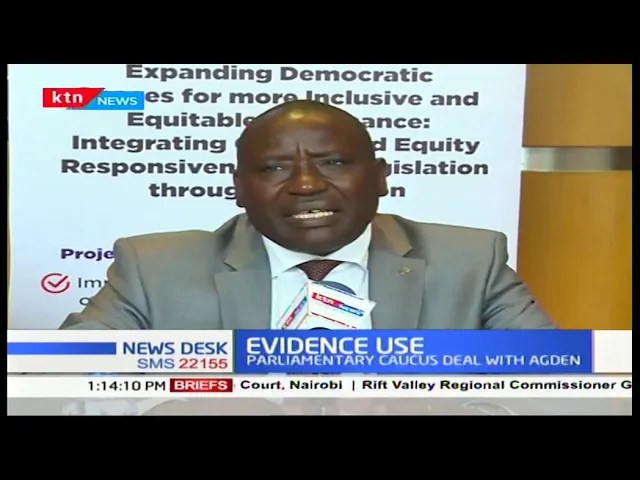 AGDEN members have produced reports that comprehensively link findings and evidence to conclusions and recommendations. Evaluations followed evaluation policy and criteria of the commissioning organisations. An example was AGDEN member’s expertise in delivering high quality evaluations of ILO, Zimbabwe Joint Gender Equality Program/Women Economic Empowerment Project in 2017 based on ILO Evaluation Policy criteria to ensure the quality of the report.
AGDEN has capacity to conduct validations at workshops and conferences with key stakeholders, including subject matter experts to ground the findings and support the development of practical conclusions and recommendations: example, AGDEN member was Senior Evaluator/Team member for the Mid-term Review of Kenya UN Development Assistance Framework (UNDAF) in 2016. The actionable recommendations from this review provided foundation for development of the subsequent UNDAF.
AGDEN has capacity and experience to partner with international and local institutions and implementing partners to support their needs. Examples: AGDEN has maintained important strategic partnerships with organizations like UN Women (previously UNIFEM), Ford Foundation and international evaluation knowledge networks. Through a South-South partnership with REDWIN and ReLAC from Latin America and the Caribbean (LAC) and the Community of Evaluators (CoE) in South Asia in 2016, AGDEN provided technical capacity that identified good practices developed into case studies to support training on specific topics. A revised AGDEN curricula on gender responsive evaluation training incorporates the case studies. The curricula and results of the good practices were validated at events such as SAMEA conference, 2017; IDEAS, ReLAC and RedLACMA conference, 2017; Panel discussion at EvalFest – Evaluation Community of India, 2018, “African Perspectives on Equity and No one left behind.”
As another example, AGDEN being an active member of EvalGender+ management group contributed to “High level strategic event on “Evaluating SDGs with an equity-focussed and gender-responsive lens” in New York 2016 and “EvalPartners 3rd Global Forum in Biskek 2017”.
AGDEN has capacity and experience to facilitate evaluation implementation planning, including team planning meetings, and research designs for studies. In 2016, AGDEN was commissioned by the Centre for Learning on Evaluation and Results for Anglophone Africa (CLEAR – AA) and successfully conducted national gender assessments of the government wide evaluation systems and policies in Uganda, Benin and South Africa. The results of this project were used to showcase AGDEN’s capacity at a number of fora. (such as, 2016 Roundtable presentation at the American Evaluation Association (AEA) conference, 2016 European Evaluation Association conference, 2016 Presentation at African Evidence Network (AEN) conference and 2017 Presentation at AfrEA conference: “Gender Responsiveness Diagnostic Methodological Reflections.”
AGDEN has capacity to draft, revise, edit, and prepare evaluation reports for publication, including impact evaluations, meta-evaluations, syntheses, and other publications related to evaluation, such as workshop and seminar reports:
For example, there have been two publications by AGDEN members in scientific journals:

AGDEN Member elected to serve as AfrEA Vice-President 2022 – 2024.
Experience with gender transformative evaluation.